
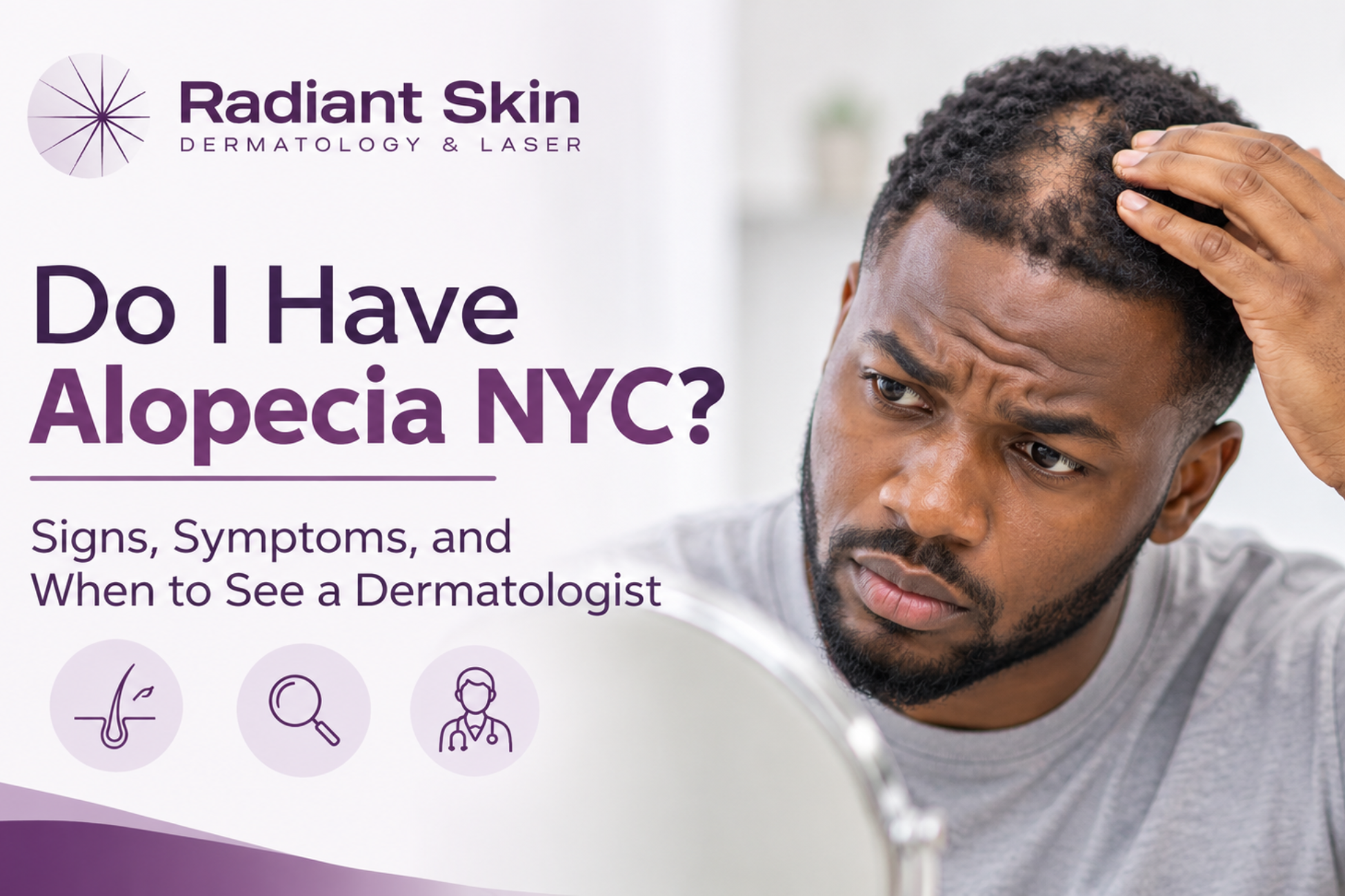
Hair loss can be difficult to understand, especially when you begin noticing more strands on your pillow, thinning around your hairline, or small bald patches on your scalp. While some hair shedding is completely normal, persistent or unusual hair loss may indicate an underlying condition such as alopecia.
If you have been asking yourself, "Do I Have Alopecia NYC?", understanding the warning signs is a good place to start. Alopecia affects people of different ages and backgrounds, and its symptoms can vary depending on the type and underlying cause. Recognizing these changes early and consulting a qualified dermatologist can help you understand what is happening to your hair and explore appropriate treatment options.
Alopecia is the medical term for hair loss. It can affect the scalp, eyebrows, eyelashes, facial hair, or other areas of the body. Depending on the condition, hair loss may develop gradually, occur suddenly, or appear in distinct patches.
· Non-scarring alopecia: The hair follicles remain intact, but the normal hair growth cycle is disrupted. Hair may regrow depending on the underlying condition.
· Scarring alopecia: Inflammation damages the hair follicles and replaces them with scar tissue. This can result in permanent hair loss in affected areas.
Common conditions include alopecia areata, telogen effluvium, male and female pattern hair loss, and different forms of scarring alopecia. Each condition behaves differently, which is why identifying the specific cause matters before considering treatment.
Not every instance of hair loss means you have alopecia. However, certain changes deserve attention, particularly when they continue or become more noticeable.
One noticeable symptom of alopecia areata is the sudden development of round oroval bald patches. These areas may appear without much warning and can affect one or multiple parts of the scalp.
If your hair looks less dense than before, your scalp becomes more visible, or your ponytail feels thinner, you may be experiencing a form of progressive hair loss.
Changes around the forehead and temples can indicate pattern hair loss or traction-related damage. A gradually changing hairline should be evaluated if the thinning continues.
Finding more hair than usual in your shower drain, hair brush, or on your pillow may indicate excessive shedding. Telogen effluvium, which can follow physical stress,illness, or hormonal changes, is one possible explanation.
A nun comfortable scalp accompanied by hair loss may suggest inflammation or another scalp condition. Persistent itching, tenderness, scaling, or burning should not be ignored.
Alopecia is not limited to the scalp. Some forms can affect eyebrows and eyelashes,resulting in noticeable gaps or reduced hair density.
When thinning or bald patches continue to expand, professional evaluation becomes increasingly important. Certain inflammatory forms of alopecia can permanently damage follicles if left untreated.
There is no single cause of alopecia. Hair growth depends on several factors, including genetics, hormones, immune activity, and overall health.
· Genetics: Hereditary hair loss can affect both men and women, often developing gradually over time.
· Auto immune activity: In alopecia areata, the immune system mistakenly attacks hair follicles, resulting in hair loss.
· Hormonal changes: Changes associated with pregnancy, menopause, thyroid conditions,or other hormonal fluctuations may affect hair growth.
· Physical oremotional stress: Significant stress, illness, surgery, or other physical changes can trigger temporary excessive shedding.
· Hairstyling practices: Repeatedly wearing tight hairstyles can place tension on follicles and contribute to traction alopecia.
· Inflammatory scalp conditions: Certain disorders can damage follicles and cause scarring hairloss.
Understanding the underlying trigger is essential because treatment recommendations depend on the specific condition rather than the amount of hair lost alone.
Hair loss can look similar across different conditions, making self-diagnosis unreliable. A dermatologist evaluates the scalp and hair to determine whether the problem involves temporary shedding, follicle damage, inflammation, or another underlying issue.
At Radiant Skin NYC , the diagnostic approach includes a thorough medical history and scalp examination. Depending on individual findings, selected laboratory tests or a punch biopsy may also be necessary.
· When youfirst noticed the hair loss.
· Whether itappeared suddenly or developed gradually.
· Any familyhistory of hair loss.
· Recentillnesses, stressful events, or hormonal changes.
· Medications and existing medical conditions.
· Hair-care routines and styling practices.
These details help narrow down possible causes and guide the next steps. An accurate diagnosis also helps prevent unnecessary treatments that may not address the actual problem.
Alopecia treatment depends on the diagnosed condition, its severity, and whether the hair follicles remain healthy. There is no universal solution that works forevery type of hair loss.
· Topical Minoxidil: A commonly used treatment for certain forms of hair thinning and pattern hair loss that supports hair growth.
· Corticosteroids: These medications may be recommended for selected inflammatory or autoimmune hair-loss conditions.
· Spironolactone: A prescription medication that may be considered for certain women experiencing hormonally influenced hair loss.
· Finasteride: A prescription option used for selected cases of pattern hair loss, depending on individual suitability.
· Telogen Effluvium Management: Treatment focuses on identifying and addressing the underlying trigger, as this condition is often self-limiting.
Not every treatment is appropriate for every patient. Your dermatologist will consider your diagnosis, medical history, and individual needs before recommending a suitable approach.
You can explore the available alopecia and hair loss treatment options at Radiant Skin NYC to learn more about its dermatological services.
Occasional hair shedding is part of the natural growth cycle. However, certain changes should prompt a professional evaluation rather than continued experimentation with over-the-counter products.
· Sudden bald patches or unexplained hair loss.
· Noticeable thinning that continues over several weeks.
· Persistent scalp itching, redness, tenderness, or scaling.
· Hair loss affecting your eyebrows or eyelashes.
· A receding hairline or widening part that continues to progress.
· Hair loss accompanied by other unexplained symptoms.
Early evaluation is particularly important when scarring alopecia is suspected because damaged follicles may not recover their ability to produce hair.
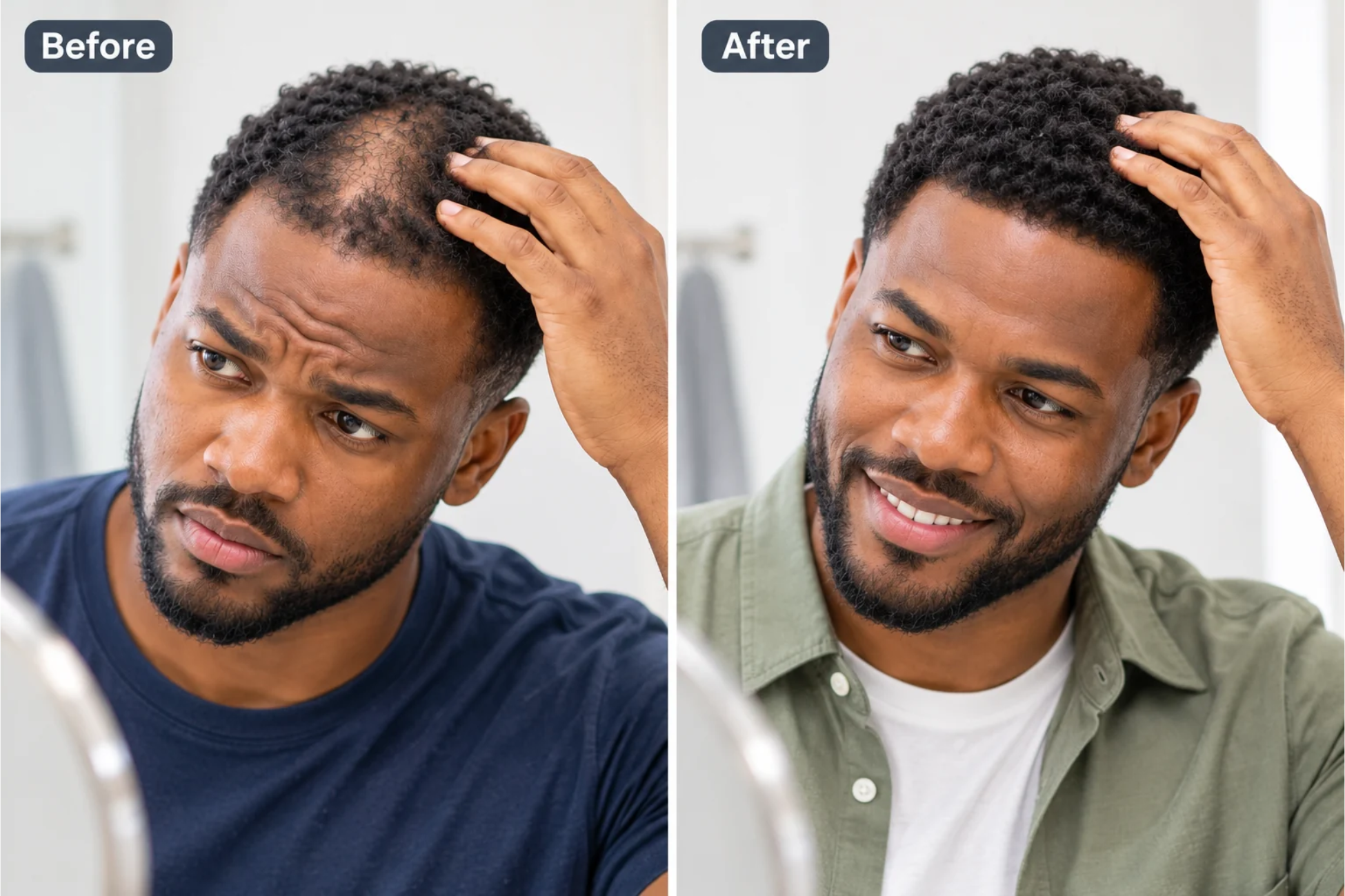
Normal shedding usually occurs gradually as part of the hair growth cycle. Alopecia may involve excessive shedding, visible thinning, bald patches, or changes in the scalp. A dermatologist can identify the underlying cause.
Yes. Conditions such as alopecia areata can cause sudden, patchy hair loss. Telogeneffluvium can also trigger increased shedding following illness, stress, or significant physical changes.
Not always.Some types of alopecia are temporary or manageable with appropriate treatment.However, scarring alopecia can cause permanent hair loss when follicles are destroyed.
Yes. Women can experience several types of alopecia, including female pattern hair loss,alopecia areata, telogen effluvium, and traction alopecia.
A board-certified dermatologist with experience in hair and scalp conditions is a suitable starting point. They can examine your scalp, determine the possible cause, and recommend appropriate treatment options.
Wondering,"Do I Have Alopecia NYC?" does not have to leave you guessing.Changes in hair density, sudden bald patches, and persistent shedding deserve attention, particularly when they begin affecting your confidence and everyday life.
At Radiant Skin NYC, Dr. Adebola Dele-Michael, a board-certified dermatologist and Assistant Clinical Professorat the Icahn School of Medicine at Mount Sinai, provides dermatological care focused on understanding individual skin and hair concerns. Her approach emphasizes identifying underlying causes and discussing personalized treatment options.
If you have noticed unusual hair loss or changes in your scalp, take the next step toward understanding your hair health. Request an appointment with Radiant Skin NYC to discuss your concerns and explore appropriate alopecia evaluation and treatment options.


© Dr. Dele-Michael 2023
All rights reserved.