
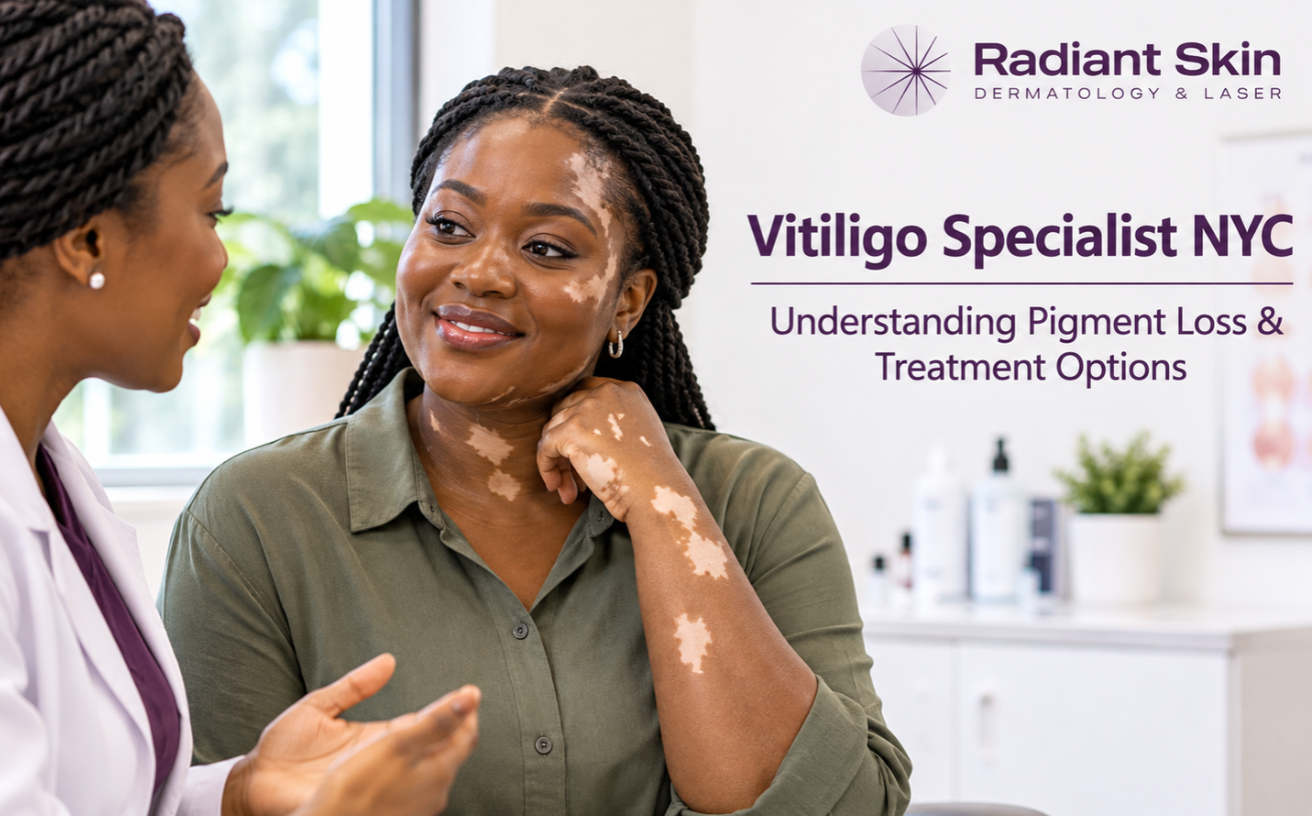
Skin colour is an important part of our appearance, and noticing unexpected white patches can naturally raise questions. Why is the skin losing its colour? Will the patches spread? Can the original pigment return? These are common concerns among people experiencing vitiligo.
Vitiligo is a condition that affects the cells responsible for producing melanin, the pigment that gives skin its natural colour. Although it can affect people of all skintones, the contrast between affected and unaffected areas may be more noticeable on darker complexions.
Understanding what causes vitiligo and how it can be managed is an important first step towards making informed decisions about skin health. With professional guidancefrom a Vitiligo Specialist NYC , patients can explore suitable treatment options and receive care based on their individual skin needs.
At Radiant Skin NYC, dermatological care focuses on understanding the person behind the skin concern, recognising individual differences and creating personalised treatment approaches.
Vitiligo develops when melanocytes, the specialised cells responsible for producing melanin, stop functioning or are destroyed. As a result, certain areas of the skin gradually lose their natural pigment and develop lighter patches.
These patches can appear almost anywhere on the body, although some areas are more commonly affected.
· Face,particularly around the eyes and mouth.
· Hands,fingers and wrists.
· Elbows and knees.
· Feet and ankles.
· Areas around the lips and other body openings.
· Hair and scalp, where affected hair may turn white or grey.
Vitiligo does not look the same in everyone. Some individuals develop a few small patches,while others experience more wide spread pigment loss. The condition may remain stable for years or change over time.
Importantly,vitiligo is not contagious. It cannot spread from one person to another through touching, sharing personal belongings or everyday physical contact.
The exact cause of vitiligo is not completely understood. However, research suggests that an auto immune response plays a significant role in many cases.
In an auto immune condition, the body's immune system mistakenly targets healthy cells. In vitiligo, this response affects melanocytes, disrupting the skin's natural pigment production.
Several factors may contribute to its development.
The immune system normally protects the body against harmful organisms. However, in people with vitiligo, immune activity may mistakenly target pigment-producing cells.
This can interfere with melanin production and lead to visible depigmented patches. Vitiligo may also occur alongside other auto immune conditions, making a proper medical assessment important.
Genetics may influence a person's likelihood of developing vitiligo. Having a family member with the condition can increase susceptibility, although it does not mean that someone will necessarily develop it.
Vitiligo is influenced by several genetic and environmental factors rather than a single inherited cause.
Oxidative stress occurs when there is an imbalance between free radicals and the body's antioxidant defences.
Researchers believe oxidative stress may contribute to melanocyte damage in some individuals. However, its exact role in triggering vitiligo is still being studied.
In some people, skin injuries, cuts, burns or repeated friction may trigger new patches of vitiligo. This phenomenon is known as the Koebner phenomenon.
It is one reason dermatologists often recommend avoiding unnecessary skin irritation and trauma.
Not everywhite or light-coloured patch indicates vitiligo. Other skin conditions,including certain fungal infections and inflammatory disorders, can produce similar changes.
This makes professional evaluation particularly important.
· Medical history: When the patches first appeared and whether they have changed.
· Skin examination: The location, appearance and extent of pigment loss.
· Family history: Whether close relatives have vitiligo or related autoimmuneconditions.
· Previous treatments: Products or medications already used and their effects.
· Additional assessment: A Wood's lamp examination or other investigations when clinically appropriate.
At Radiant Skin NYC, the approach to dermatological care places importance on understanding each patient's skin and medical concerns before recommending a treatment strategy.
Although there is currently no guaranteed cure for vitiligo, several medical approaches may help manage the condition, slow its progression or encourage repigmentation in suitable patients.
The right approach depends on the extent of pigment loss, disease activity, affected body areas, skin type and individual treatment goals.
Dermatologists may recommend prescription creams or ointments to help manage immune activityin affected areas and encourage pigment recovery.
The choice of medication depends on the location and extent of vitiligo, along with the patient's medical history.
Phototherapyuses carefully controlled ultraviolet light to stimulate pigment-producing cells.
Narrow band UVB is one of the established options for treating vitiligo, particularly when larger areas of the body are affected. Targeted light treatments may also be considered for smaller areas.
Treatment generally requires multiple sessions, and results vary between individuals.
Some patients may benefit from combining topical medications with light-based treatments.
A dermatologist can determine whether combining therapies is appropriate based onthe patient's condition and response to previous treatment.
Everyday skin protection is also important when managing vitiligo.
Helpful habits include:
· Applying broad-spectrum sunscreen with SPF 30 or higher.
· Avoiding sunburn and excessive ultraviolet exposure.
· Using gentle skincare products that do not irritate the skin.
· Protecting vulnerable areas from cuts and repeated friction.
· Following prescribed treatments consistently.
These habits support skin health but do not replace medical treatment.
Vitiligo management is not simply about addressing visible white patches. It involves understanding the condition, evaluating changes over time and considering how treatment fits into everyday life.
This is particularly important for people with darker skin tones, where differences in pigmentation may be more visually noticeable.
At Radiant Skin NYC, Dr.Adebola Dele-Michael brings board-certified dermatological expertise and a strong background in skin of colour care. Her Layered-Approach™ philosophy emphasises understanding the underlying factors contributing to skin concerns and tailoring care to individual needs.
· Their natural skin tone and individual skin characteristics.
· The extent and location of pigment loss.
· Changes inexisting patches.
· Previous treatment experiences.
· Personal concerns, expectations and long-term skin health.
The objectiveis to help patients understand their condition and make informed decisions rather than rely on generic treatment recommendations.
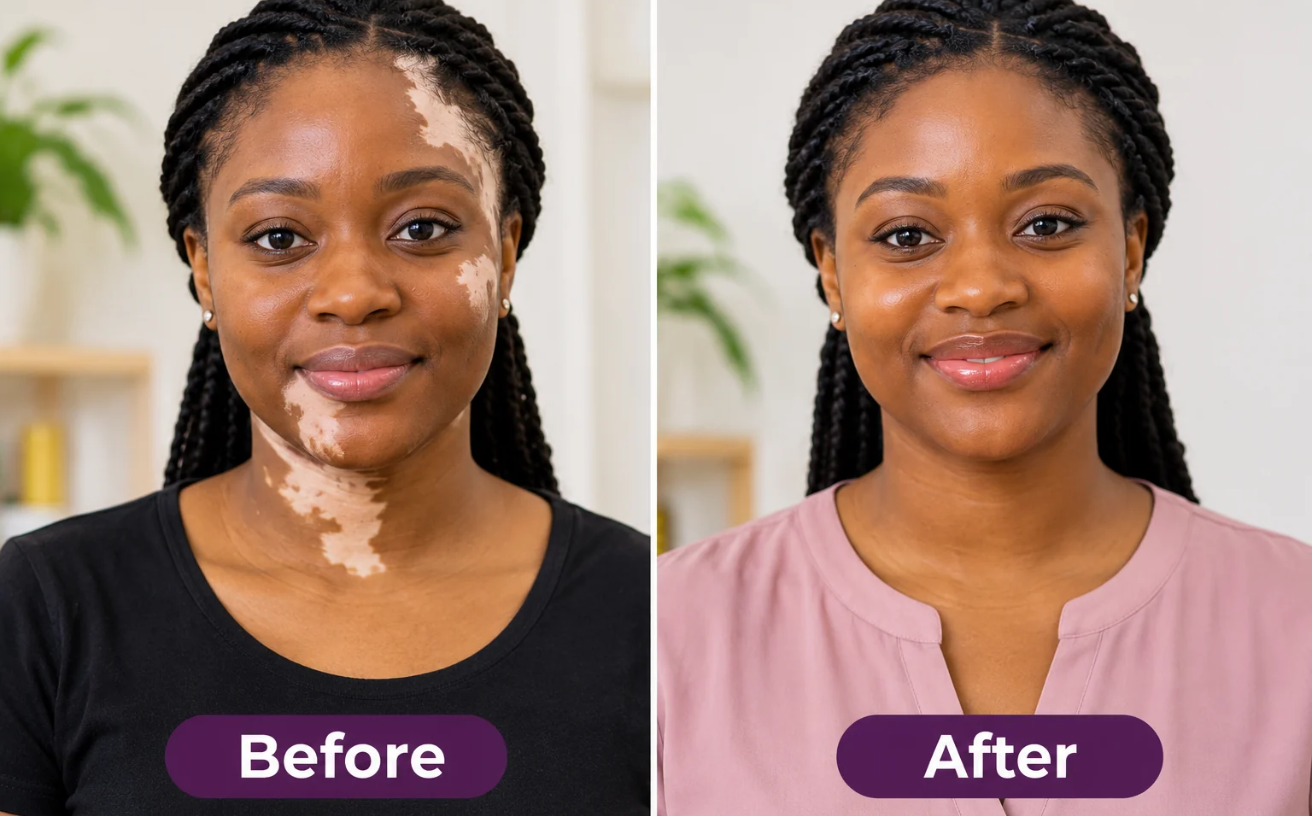
Vitiligo is commonly associated with an auto immune response in which the immune system mistakenly attacks melanocytes, the cells responsible for producing skinpigment. Genetic and environmental factors may also contribute.
Yes. Vitiligo patches may appear in new areas or increase in size over time. However, the progression varies considerably. Some people experience stable patches for years, while others notice changes more frequently.
Repigmentation is possible with certain treatments, including prescription topical therapies and photo therapy. However, the amount of pigment that returns varies depending on factors such as the affected area, disease activity and treatment response.
Vitiligo can affect every skin tone, but the contrast between depigmented patches and surrounding skin may be more noticeable on darker complexions. This can also make personalised dermatological assessment particularly important.
Stress is not established as a direct cause of vitiligo. However, physical or emotional stress may be associated with changes in symptoms in some individuals. The relationship is still being researched.
Vitiligo is not contagious or generally life-threatening. However, it can affect emotional well-being and may occur alongside other auto immune conditions. Professional evaluation helps address these considerations.
Consider seeing a dermatologist when you notice unexplained white patches, changes in existing patches or pigment loss affecting your hair. Early evaluation can help confirm the diagnosis and identify appropriate management options.
Living with vitiligo can bring questions about appearance, treatment and what to expect inthe future. Understanding the condition makes it easier to approach those concerns with confidence.
From identifying possible causes to exploring suitable medical treatments,professional dermatological guidance can make a meaningful difference in managing pigment loss.
At Radiant Skin NYC, Dr. Dele-Michael combines medical expertise, personalised attention and an understanding of diverse skin types to help patients navigate their dermatological concerns.
If you have noticed unexplained white patches or are looking for guidance on managing vitiligo, request an appointment with Radiant Skin NYC and take the next step towards understanding your skin.


© Dr. Dele-Michael 2023
All rights reserved.